
Choosing the right approach for an AI project is rarely a purely technical decision. It depends on available data, operational constraints, regulatory requirements, team capabilities, and the nature of the problem itself. Yet in practice, method selection is often driven by familiarity or trend rather than structured analysis.
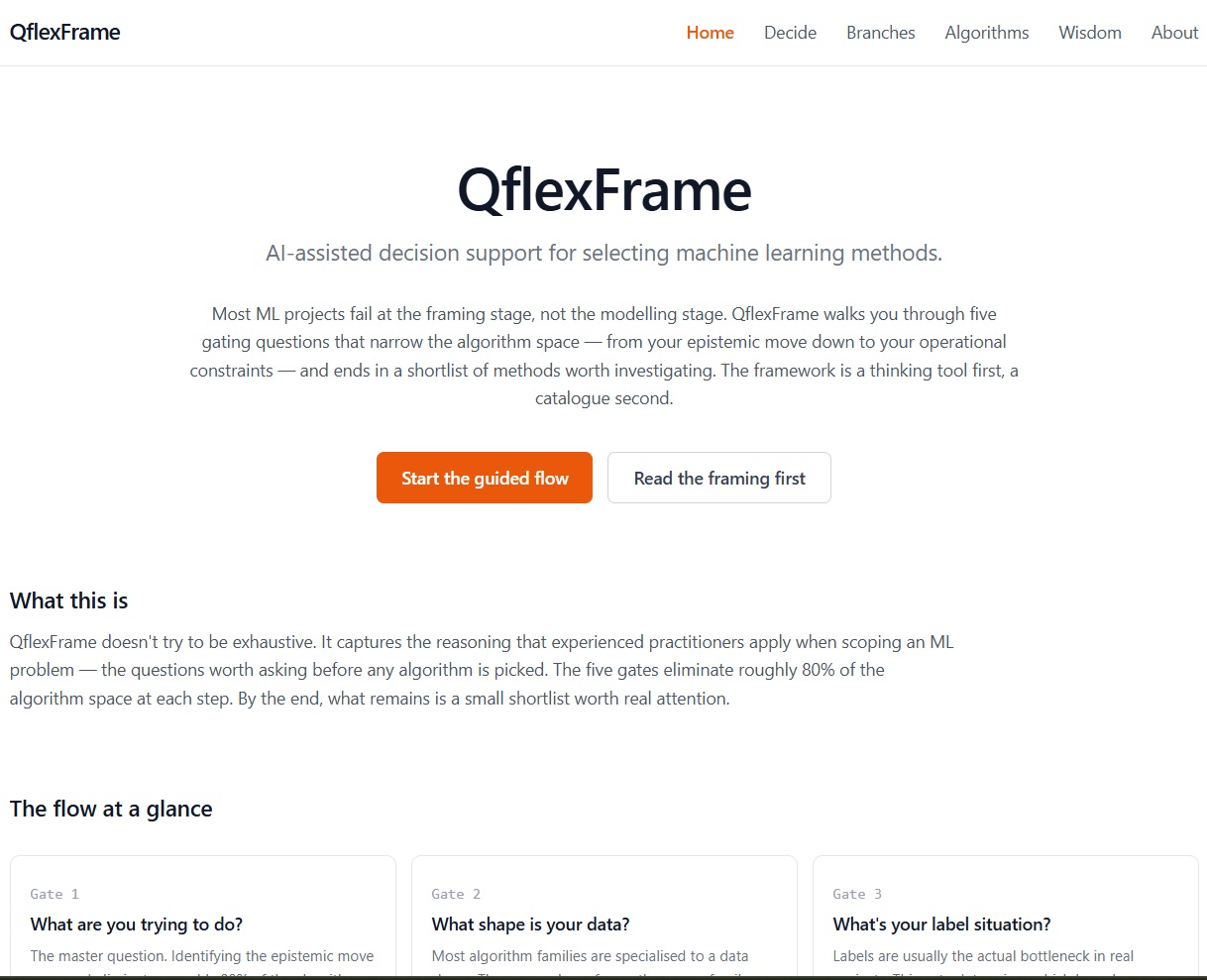
QFlexFrame is our response to this gap. It is a structured decision-making framework designed to make the reasoning behind AI method choices explicit, traceable, and accessible to all stakeholders — not just the technical team.
What QFlexFrame does
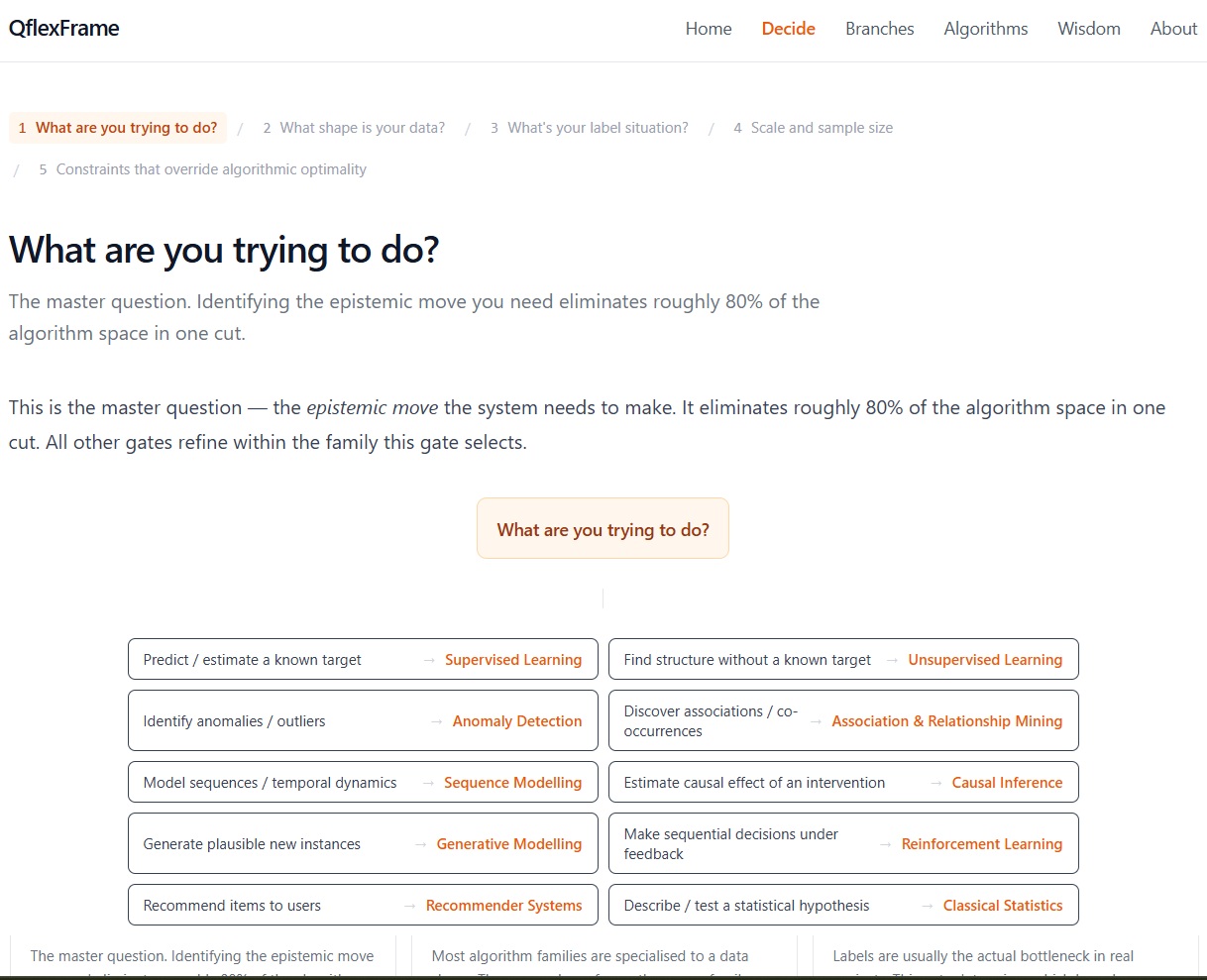
QFlexFrame guides teams through a systematic evaluation of the problem space, the available options, and the constraints that shape the decision. Rather than prescribing a single "best" method, it structures the analysis so that stakeholders can see why a method was chosen, not just what was chosen.
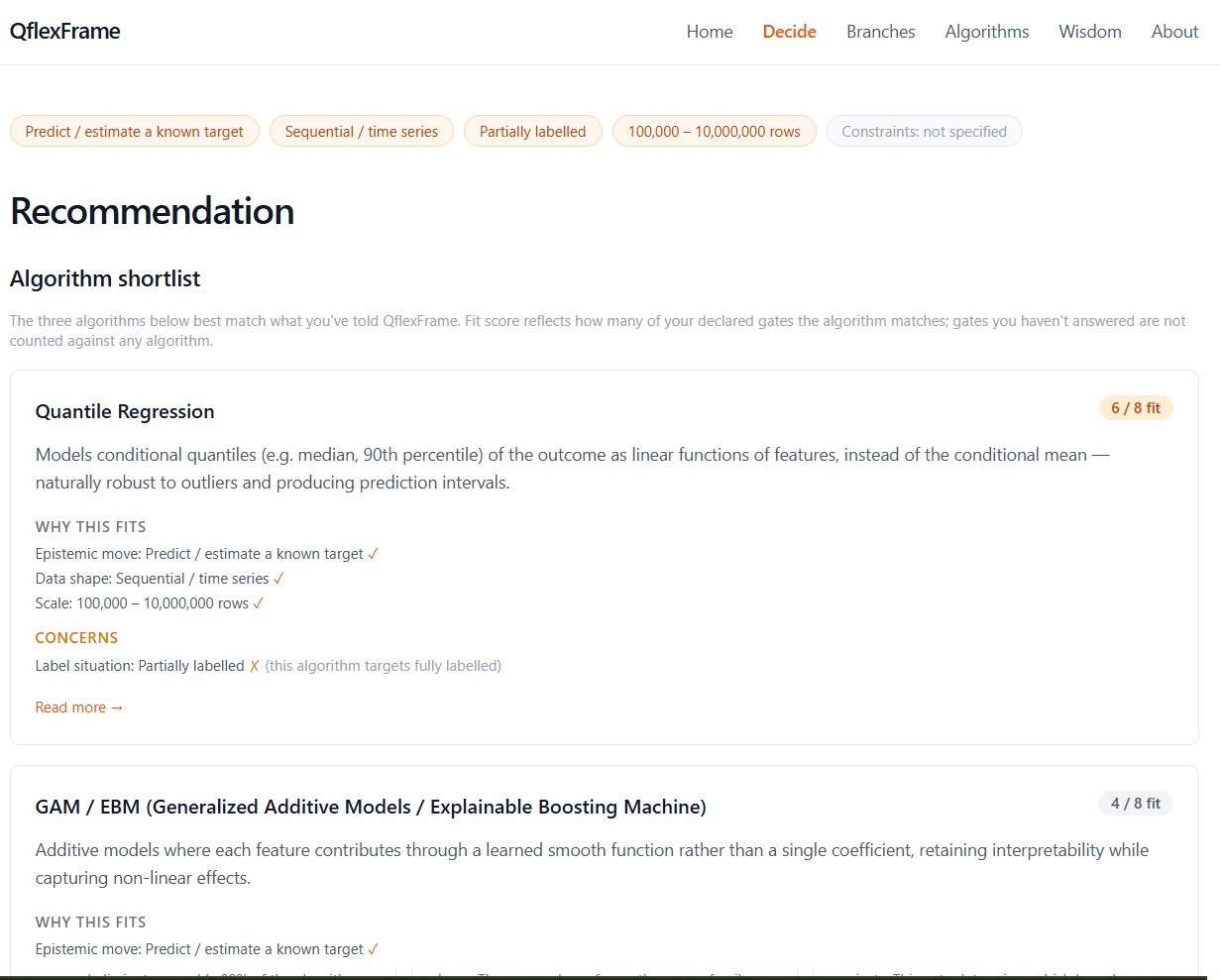
The framework also makes uncertainty visible. When the inputs are sparse or the constraints conflict, QFlexFrame says so rather than producing a confident-sounding answer to a question that wasn't fully asked.
Why it matters
In many organisations, the gap between "we need AI" and "we have a working solution" is filled with implicit assumptions, undocumented trade-offs, and decisions that are difficult to revisit later. QFlexFrame addresses this by providing:
- a clear record of the decision rationale, linked to the specific constraints and inputs that shaped it;
- a structured way to compare alternatives before committing resources;
- a common language between technical teams, management, and compliance stakeholders;
- a mechanism to surface gaps in data, expertise, or requirements early in the process.
Who it is for
For organisations with mature AI teams, QFlexFrame is a structured starting point that focuses internal discussion. It replaces ad-hoc method selection with a repeatable process that captures institutional knowledge and makes it available for future projects.
For organisations still building their AI capability, it provides the methodological backbone that experienced practitioners would otherwise have to be hired to provide. It shortens the learning curve and reduces the risk of costly missteps in early projects.
How we use it
We use QFlexFrame in our own engagements. Every project we undertake begins with a structured assessment using the framework, ensuring that our recommendations are grounded in the client's actual context rather than generic best practices.
We have made it available to our clients because the same questions come up in every project, and a structured way to answer them shortens the path from problem to working solution.
Looking ahead
QFlexFrame is not a static document. As we work with more organisations and encounter new problem patterns, the framework evolves. Our goal is to make AI method selection as rigorous and transparent as the engineering disciplines that organisations already trust — and to ensure that every decision can be explained, questioned, and improved.